When Is Jaywalking Illegal?

Aug 27, 2026
7 min read
Laws
Pedestrian Accidents
Our Practice Areas
Key Takeaways
- Jaywalking is a provincial offence under motor vehicle legislation, not a criminal offence.
- Nova Scotia has one of the highest jaywalking fines in Canada at up to $697.50.
- Pedestrians have the right of way at marked crosswalks and at all intersections in Atlantic Canada.
- If you are hit while jaywalking, you may still have a personal injury claim, but contributory negligence could reduce your compensation.
- Drivers still owe a duty of care to pedestrians even outside crosswalks.
- If you are injured as a pedestrian, speak with a personal injury lawyer about your options.
Most people in Atlantic Canada have crossed a street outside of a crosswalk at some point. Maybe you were running late, maybe the nearest crosswalk was two blocks away, or maybe you just did not think twice about it. But jaywalking can carry real legal consequences, and if you are hit by a vehicle while crossing outside of a designated area, the legal picture gets complicated fast.
Here is what you need to know about jaywalking laws in New Brunswick, Nova Scotia, and Prince Edward Island.
What Is Jaywalking?
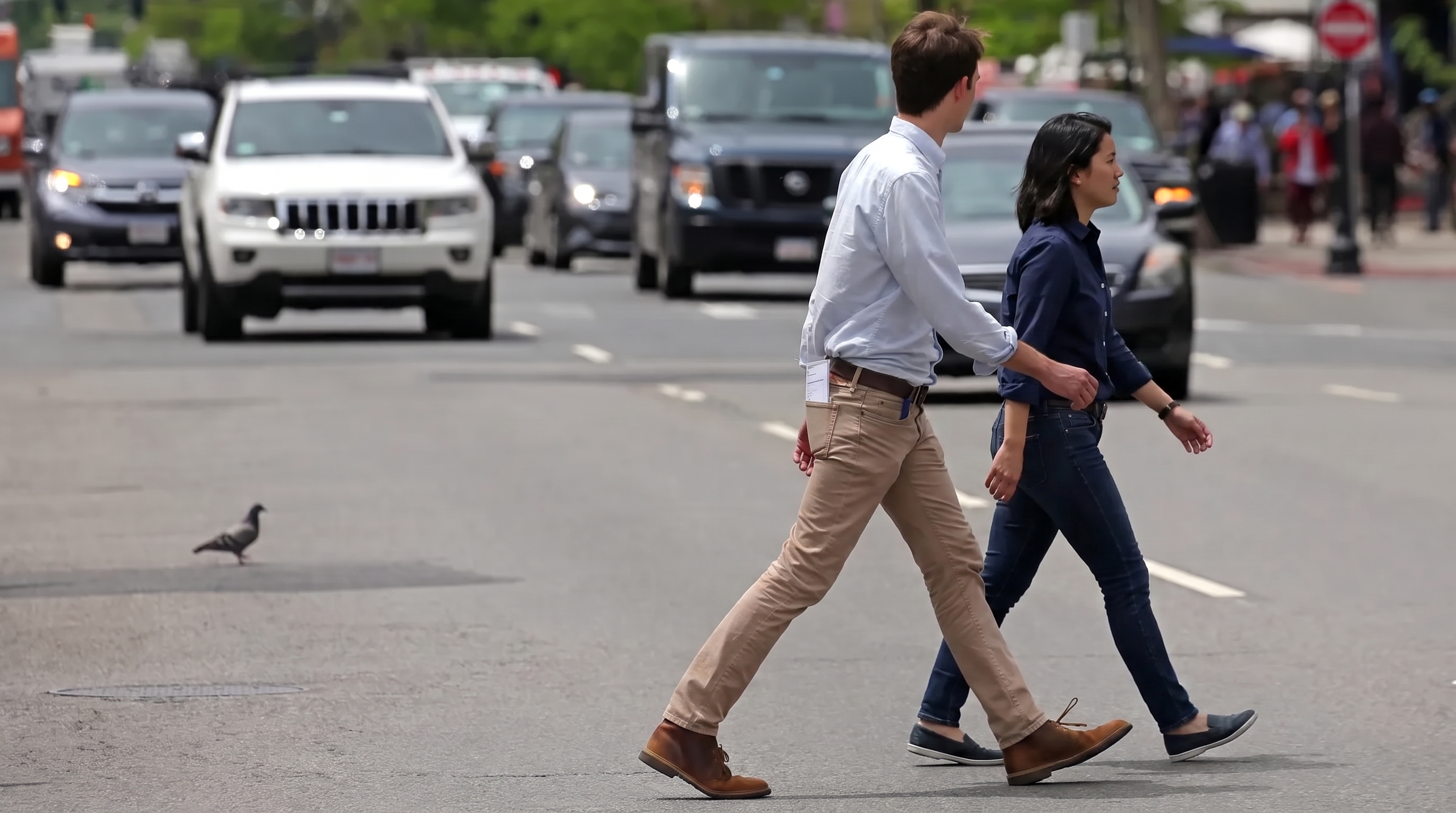
Jaywalking means crossing a roadway outside of a marked crosswalk or intersection where a crosswalk is available. It is not defined in the Criminal Code of Canada, which means it is not a criminal offence. Instead, jaywalking is regulated at the provincial level through motor vehicle and highway traffic legislation.
Each Atlantic province has its own rules about where and how pedestrians can legally cross a road.
Jaywalking Laws in Nova Scotia
Nova Scotia takes jaywalking more seriously than most provinces. Under the Nova Scotia Motor Vehicle Act, pedestrians must use a crosswalk where one is reasonably available. If you cross outside of a crosswalk when one exists nearby, you can be fined.
In 2015, Nova Scotia raised its jaywalking fine to $697.50, making it one of the highest pedestrian fines anywhere in Canada. The increase drew sharp criticism from residents and advocacy groups who argued that the fine was disproportionate, especially for people with lower incomes. There was public pressure to review the amount, but the fine remains a real possibility for anyone ticketed for crossing outside a designated area.
Pedestrians in Nova Scotia do have the right of way at all marked crosswalks and at intersections, even those without painted markings. But once you step outside those areas, the law expects you to yield to traffic.
Jaywalking Laws in New Brunswick
New Brunswick's Motor Vehicle Act also addresses pedestrian crossing rules. Under section 170(1), drivers must yield the right of way to pedestrians crossing within any crosswalk, whether marked or unmarked. Every intersection in New Brunswick is considered a crosswalk, even if there are no painted lines.
If you cross mid-block or outside of an intersection where a crosswalk is available, you are expected to yield to vehicles. Fines for pedestrian violations in New Brunswick are lower than in Nova Scotia, but they still apply. More importantly, crossing outside a crosswalk puts you at greater physical risk and can affect your legal position if a collision occurs.
Jaywalking Laws in Prince Edward Island
PEI's Highway Traffic Act contains similar provisions. Pedestrians must cross at intersections or marked crosswalks where they are available, and drivers must yield to pedestrians in those areas. Crossing outside a crosswalk when one is nearby can result in a fine and may be considered when assigning fault in an accident.
PEI's fines are more modest than Nova Scotia's, but the principle is the same. If you cross where you are not supposed to, you carry some legal responsibility for the risk.
What Happens If You Are Hit While Jaywalking?
This is where many people get surprised. If you are struck by a vehicle while crossing outside a crosswalk, you may still have a valid pedestrian accident claim. Drivers in all three Atlantic provinces owe a duty of care to everyone on the road, including pedestrians who are not in a crosswalk.
A driver who is speeding, distracted, impaired, or simply not paying attention can still be found at fault or partially at fault for hitting a pedestrian, even if that pedestrian was jaywalking at the time.
However, your compensation may be reduced through what is called contributory negligence. This means the court looks at both parties and decides how much each person contributed to the accident. If the court finds that you were 30 percent at fault for crossing outside a crosswalk, your compensation would be reduced by 30 percent.
This is why the specific facts of the collision matter so much. Where exactly you were crossing, whether the driver had time to react, the speed of the vehicle, lighting conditions, and other details all play into the analysis.
Drivers Still Have a Duty to Watch for Pedestrians
Even when a pedestrian is crossing outside of a crosswalk, drivers are not free to ignore them. Every provincial motor vehicle act requires drivers to exercise reasonable care and keep a proper lookout for hazards on the road, including pedestrians.
If a driver sees or should have seen a pedestrian and fails to slow down, stop, or take evasive action, that driver can be held liable. The fact that the pedestrian was jaywalking does not automatically absolve the driver of all responsibility.
Tips for Staying Safe as a Pedestrian
Atlantic Canadian roads can be unpredictable, especially in winter when daylight is short and visibility is poor. Here are some practical steps to reduce your risk:
- Use marked crosswalks and intersections whenever they are available.
- Make eye contact with drivers before stepping onto the road.
- Wear bright or reflective clothing when walking at night or in low-light conditions.
- Do not assume that a driver sees you, even in a crosswalk.
- Avoid crossing while distracted by a phone or headphones.
What to Do If You Are Injured
If you are hit by a vehicle as a pedestrian, whether you were in a crosswalk or not, the first priority is medical attention. Call 911, get checked out at the hospital, and document as much as you can about the scene.
From a legal perspective, the sooner you speak with a personal injury lawyer, the better. Evidence from the scene fades quickly, and the insurance company for the driver will begin building their version of events right away. Having someone in your corner early makes a real difference.
CLG Injury Law offers free case reviews for pedestrian injury claims across New Brunswick, Nova Scotia, and Prince Edward Island. If you have been hurt, get in touch, we can help you understand your options. You do not have to figure this out alone.
Most people in Atlantic Canada have crossed a street outside of a crosswalk at some point. Maybe you were running late, maybe the nearest crosswalk was two blocks away, or maybe you just did not think twice about it. But jaywalking can carry real legal consequences, and if you are hit by a vehicle while crossing outside of a designated area, the legal picture gets complicated fast.
Here is what you need to know about jaywalking laws in New Brunswick, Nova Scotia, and Prince Edward Island.
What Is Jaywalking?
Jaywalking means crossing a roadway outside of a marked crosswalk or intersection where a crosswalk is available. It is not defined in the Criminal Code of Canada, which means it is not a criminal offence. Instead, jaywalking is regulated at the provincial level through motor vehicle and highway traffic legislation.
Each Atlantic province has its own rules about where and how pedestrians can legally cross a road.
Jaywalking Laws in Nova Scotia
Nova Scotia takes jaywalking more seriously than most provinces. Under the Nova Scotia Motor Vehicle Act, pedestrians must use a crosswalk where one is reasonably available. If you cross outside of a crosswalk when one exists nearby, you can be fined.
In 2015, Nova Scotia raised its jaywalking fine to $697.50, making it one of the highest pedestrian fines anywhere in Canada. The increase drew sharp criticism from residents and advocacy groups who argued that the fine was disproportionate, especially for people with lower incomes. There was public pressure to review the amount, but the fine remains a real possibility for anyone ticketed for crossing outside a designated area.
Pedestrians in Nova Scotia do have the right of way at all marked crosswalks and at intersections, even those without painted markings. But once you step outside those areas, the law expects you to yield to traffic.
Jaywalking Laws in New Brunswick
New Brunswick's Motor Vehicle Act also addresses pedestrian crossing rules. Under section 170(1), drivers must yield the right of way to pedestrians crossing within any crosswalk, whether marked or unmarked. Every intersection in New Brunswick is considered a crosswalk, even if there are no painted lines.
If you cross mid-block or outside of an intersection where a crosswalk is available, you are expected to yield to vehicles. Fines for pedestrian violations in New Brunswick are lower than in Nova Scotia, but they still apply. More importantly, crossing outside a crosswalk puts you at greater physical risk and can affect your legal position if a collision occurs.
Jaywalking Laws in Prince Edward Island
PEI's Highway Traffic Act contains similar provisions. Pedestrians must cross at intersections or marked crosswalks where they are available, and drivers must yield to pedestrians in those areas. Crossing outside a crosswalk when one is nearby can result in a fine and may be considered when assigning fault in an accident.
PEI's fines are more modest than Nova Scotia's, but the principle is the same. If you cross where you are not supposed to, you carry some legal responsibility for the risk.
What Happens If You Are Hit While Jaywalking?
This is where many people get surprised. If you are struck by a vehicle while crossing outside a crosswalk, you may still have a valid pedestrian accident claim. Drivers in all three Atlantic provinces owe a duty of care to everyone on the road, including pedestrians who are not in a crosswalk.
A driver who is speeding, distracted, impaired, or simply not paying attention can still be found at fault or partially at fault for hitting a pedestrian, even if that pedestrian was jaywalking at the time.
However, your compensation may be reduced through what is called contributory negligence. This means the court looks at both parties and decides how much each person contributed to the accident. If the court finds that you were 30 percent at fault for crossing outside a crosswalk, your compensation would be reduced by 30 percent.
This is why the specific facts of the collision matter so much. Where exactly you were crossing, whether the driver had time to react, the speed of the vehicle, lighting conditions, and other details all play into the analysis.
Drivers Still Have a Duty to Watch for Pedestrians
Even when a pedestrian is crossing outside of a crosswalk, drivers are not free to ignore them. Every provincial motor vehicle act requires drivers to exercise reasonable care and keep a proper lookout for hazards on the road, including pedestrians.
If a driver sees or should have seen a pedestrian and fails to slow down, stop, or take evasive action, that driver can be held liable. The fact that the pedestrian was jaywalking does not automatically absolve the driver of all responsibility.
Tips for Staying Safe as a Pedestrian
Atlantic Canadian roads can be unpredictable, especially in winter when daylight is short and visibility is poor. Here are some practical steps to reduce your risk:
- Use marked crosswalks and intersections whenever they are available.
- Make eye contact with drivers before stepping onto the road.
- Wear bright or reflective clothing when walking at night or in low-light conditions.
- Do not assume that a driver sees you, even in a crosswalk.
- Avoid crossing while distracted by a phone or headphones.
What to Do If You Are Injured
If you are hit by a vehicle as a pedestrian, whether you were in a crosswalk or not, the first priority is medical attention. Call 911, get checked out at the hospital, and document as much as you can about the scene.
From a legal perspective, the sooner you speak with a personal injury lawyer, the better. Evidence from the scene fades quickly, and the insurance company for the driver will begin building their version of events right away. Having someone in your corner early makes a real difference.
CLG Injury Law offers free case reviews for pedestrian injury claims across New Brunswick, Nova Scotia, and Prince Edward Island. If you have been hurt, get in touch, we can help you understand your options. You do not have to figure this out alone.
People Also Ask
Is jaywalking a criminal offence in Canada?
What is the fine for jaywalking in Nova Scotia?
Can I still make a personal injury claim if I was hit while jaywalking?
Do pedestrians always have the right of way in Atlantic Canada?
What should I do if I am hit by a car as a pedestrian?